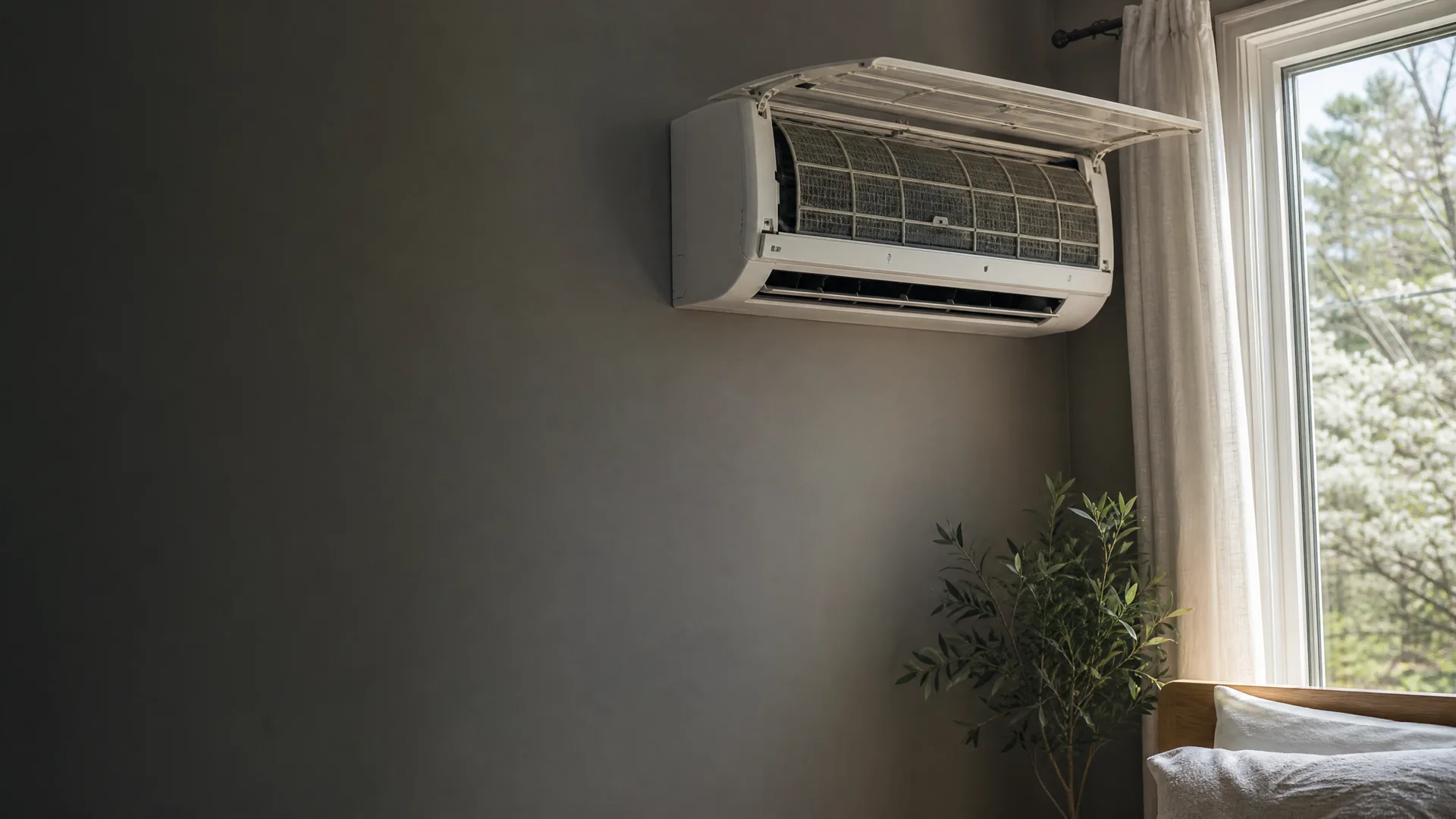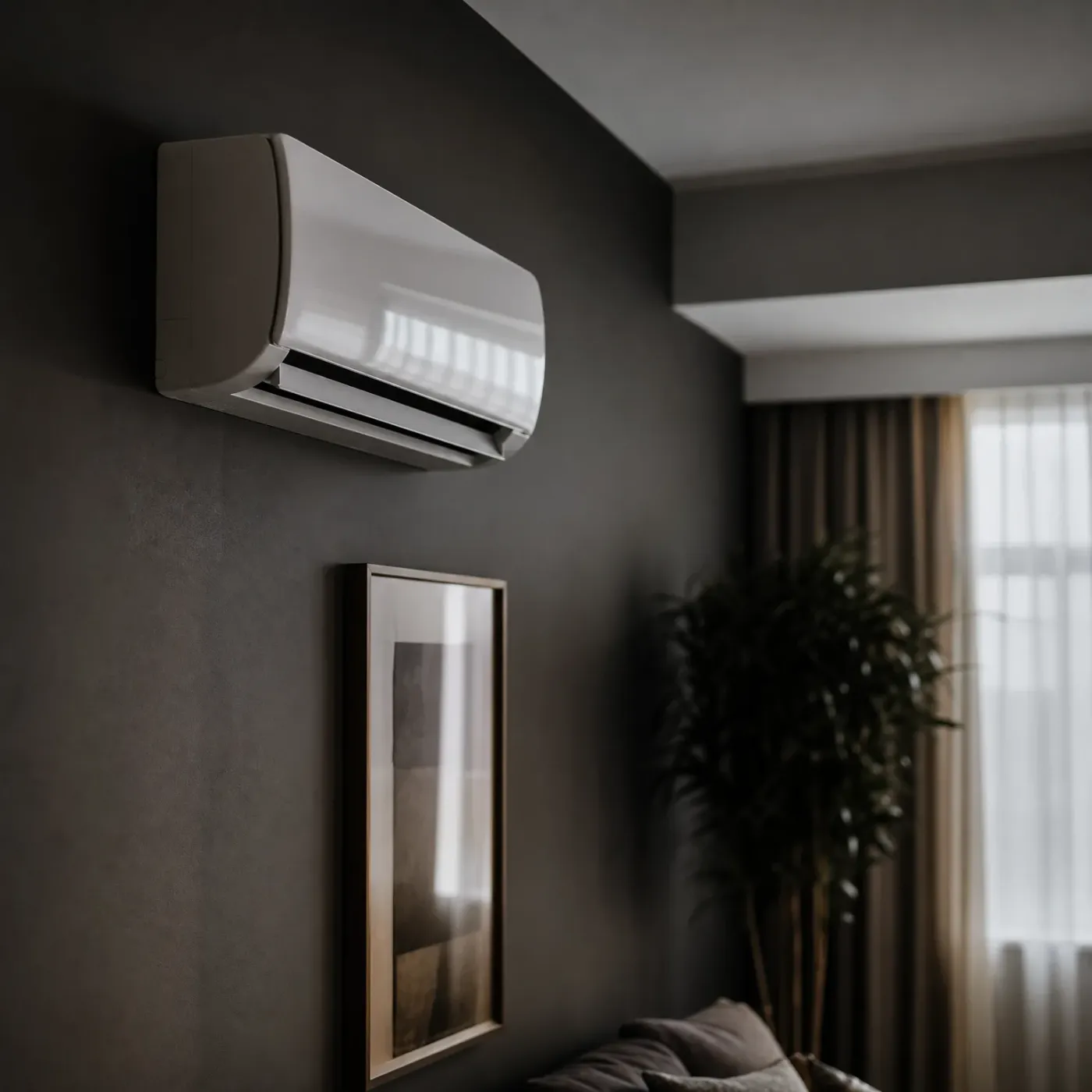


A white wall-mounted mini-split air conditioner on a dark gray interior wall above a framed picture, with a potted plant and curtained window to the right.

A local pro for your mini split maintenance

Should a mini split run all winter in Wyoming

Most houses out here heat with gas, so a mini split running on a cold Wyoming night raises a fair question. Below is what that unit can and can't do once temperatures drop, and what keeps it working right either way. Answer a few questions and a contractor who knows these systems will reach out to look at yours.

Get a mini split pro

A mini split can run all winter in Wyoming, but most homes here don't ask it to. Mini splits lose heating capacity as the outdoor temperature drops, and on the coldest nights the air they move gets noticeably cooler. Since most houses here heat with gas, the gas furnace carries the load once it gets genuinely cold, and the mini split handles the milder shoulder days in fall and spring, plus whatever room it's zoned for the rest of the year. Running it alongside the furnace isn't wrong. It just means the mini split is doing less work than its summer job cooling the house through the hot, dry stretch. What matters more than whether it runs all winter is whether it still runs well: the outdoor unit clear of snow and ice, the filter clean, the system checked before it has to work hard again.

A white wall-mounted mini-split air conditioner indoor unit with dark louvered vents, installed near the ceiling on a beige wall below white crown molding.
Before you get your mini split maintenance
A white wall-mounted mini-split air conditioner on a beige interior wall, with a window at left showing trees and a wooden fence, and dark wood flooring below.
After you get your mini split maintenance

What the cold does to it

A mini split pulls heat from outside air, and below a certain point there's less heat out there to pull. The outdoor coil also has to work harder, and that's where ice can build up on a cold night. Most units run a defrost cycle to clear it, blowing cool air inside for a few minutes while they do. That's normal. What isn't normal is ice that doesn't clear, or a unit that keeps running without catching back up. That points to a problem worth having looked at, not just a cold night.


Why gas heat still matters

With gas furnaces common here, a mini split in winter is often backup rather than the main source. That changes what maintenance should check. A unit that only runs part of the year can sit unused for months, and a filter or coil that gets dirty in fall will still be dirty when you switch back to it in spring. Checking it on a schedule, not just when it's working hardest, catches a clogged filter or a sensor issue before the next cold snap asks more of it than it can give.

A bearded man in a blue and brown plaid flannel shirt stands indoors looking out a window at snow-covered trees, with a ceramic mug on the windowsill.
A man in a blue T-shirt sits on a light gray sofa, laughing while looking at an open laptop in the foreground, with a framed picture, lamp and potted plant behind him.

The indoor head doesn't heat air on its own. It pulls room air across a refrigerant coil and pushes it back out through the fan, with no ducts carrying it anywhere. Outside, a compressor pressurizes that refrigerant so it can grab heat out of the cold air and move it inside. That's harder work on a cold night than a mild one, and it's why frost shows up on the outdoor coil. When it does, the system flips into a short defrost cycle, melting the frost before switching back to heating. You'll notice the indoor fan slow down or stop for a minute during that cycle. That's the unit resetting itself, not a breakdown. A dirty filter adds to the load by restricting airflow over the indoor coil, so the system has to run longer to put out the same heat. Outside, the coil needs open air around it all winter. Snow banked against it chokes off the airflow the compressor needs to keep pulling heat from outside at all.

How your mini split handles cold

  • The indoor head pulls air in, passes it over a refrigerant coil, and sends it back out through a fan, no ductwork involved.
  • The outdoor unit holds a compressor that pressurizes refrigerant, which is what lets it carry heat from the cold outside air into your house.
  • When frost forms on the outdoor coil, the system reverses briefly to melt it off, then switches back to heating.
  • During that defrost cycle the indoor fan usually slows or stops, so you'll feel a short pause in warm air rather than a malfunction.
  • A clogged filter restricts airflow across the indoor coil, which makes the whole cycle work harder to move the same amount of heat.
  • The outdoor coil needs clear space around it all winter, since snow piled against it blocks the airflow the compressor depends on.
A woman in a gray turtleneck sweater stands by a window looking outside at snowy ground, with a dimly lit living room containing a sofa, shelves, lamp and a lit candle behind her.
A woman in a cream cable-knit turtleneck sweater stands in a warmly lit living room with a fireplace and shelves behind her, looking out a window toward snow-covered trees and a railed deck.
A woman in a cream knit turtleneck sweater stands by a window looking out at snow, with a lit fireplace, sofa and lamp in the room behind her.
A woman in a gray knit sweater sits by a window looking out at falling snow, with a dimly lit living room containing a sectional sofa, pillows, a lamp and houseplants behind her.
A white wall-mounted mini-split indoor unit installed high on a gray interior wall, with a window at left and part of a light gray sofa with a dark cushion at lower right.

Running clean

A mini split that's been serviced pulls air through a clean coil and an unobstructed vent hood. Gas backup kicks in only when the outdoor temperature really drops, and the house stays warm the whole time.

A white wall-mounted mini-split air conditioner indoor unit with visible dust and staining along its lower vent, installed on a plain pale wall.

Running dirty

Dirt and mold across the vents choke the airflow the unit depends on. It has to work harder for less heat, and on a cold night that's the difference between keeping up and falling behind.

What would you notice if yours is struggling

On a cold morning, listen for the indoor head running longer than usual, or feel for air that's barely warm coming out of the vent. Frost on the outdoor unit that doesn't clear on its own is worth a look. If the gas furnace seems to be carrying the whole house even on milder days, the mini split may not be pulling its share. A coil caked with dirt or a blocked vent hood makes the unit work harder for less heat, and that shows up on the power bill before it shows up as a breakdown. Left alone through a Wyoming winter, a struggling unit usually just means gas picks up more of the load and the mini split sits there not doing much.

A two-story house with cream horizontal siding, a dark gabled roof, and a white front door, fronted by a lawn, shrubs, and a concrete walkway leading to a sidewalk and street, with large leafy trees on both sides.

Summer air out here averages a dew point of 42°F, which is dry, the kind of heat that doesn't sit heavy on a coil. That matters for winter too, because a mini split that's been pulling dry summer air all season isn't fighting mold or buildup the way units in muggy climates do. But dry heat still leaves dust, and a dirty coil going into winter has less capacity to spare on the nights it's already losing ground to the cold. If maintenance has slipped, a quick form gets a contractor looking at it, and you can stop tracking down who's free and let that be someone else's job.

NASA POWER T2MDEW county cells weighted by homes

Get the right pro for your mini split

Send the form, and lining up the mini split tune-up stops being yours to chase.

You only hire the pro if you want to.

A wall-mounted mini-split air conditioner with its front cover open exposing the filters, on a gray interior wall beside a curtained window with green trees outside and a potted plant below.

March, late afternoon, and the light coming through the blinds is thin and a little gray. You've got the front cover of the indoor unit lifted up, held with one hand, and you're looking at the filter screen behind it. It's gray with dust, the kind that's been sitting there since before the snow started. You run a finger along it and it leaves a clean line. The room's been a little stuffy the last few mornings, and now you know why. Outside the window the yard still has patches of old snow in the shade. You set the cover down on the bed so you don't lose track of the screws, and go to find something to pull the screen loose with.

Power costs 13.37 cents per kilowatt-hour statewide

Power here is cheap, so running your mini split's backup heat strip on a cold night won't hit your bill hard. That makes a quick repair or a maintenance visit worth more than it costs elsewhere, since the unit isn't what's driving your winter power use.

EIA-861 2025 statewide residential average

A white wall-mounted mini-split air conditioner installed high on a light gray interior wall below a white crown molding and ceiling with a recessed light.
A serviced mini split holds its rated output as long as the cold allows, with the coil clean and the vents clear.
A dusty, discolored white wall-mounted mini-split air conditioner unit installed on a plain beige interior wall below a molding strip.
A neglected one loses capacity sooner than it should, and that dusty casing usually means a coil that's choking too.

Running alone or with gas backup

Mini split alone

  • Capacity drops as the outdoor temperature falls, so on the coldest nights the heat coming out of the vent is weaker than it was in the fall.
  • No gas line or furnace involved, so there's nothing to check on that end, just the indoor head and the outdoor unit.
  • A dirty coil or blocked vent hood makes this worse, since the unit is already working harder in the cold.
  • If the outdoor coil ices over and the defrost cycle can't keep up, the heat it puts out drops further still.
  • Without gas backup, the house depends entirely on what the mini split can still pull from the cold outside air.

Mini split with gas backup

  • Gas backup picks up the difference once the outdoor temperature gets low enough that the mini split can't keep pace on its own.
  • Power here is cheap, so the mini split can keep running on cold nights without pushing the bill up much.
  • The furnace carries the load on the coldest days, so the house stays warm even if the mini split's output has dropped off.
  • A mini split that's been serviced still contributes real heat on milder winter days, which means the furnace runs less than it would alone.
  • Most houses here are already set up this way, with gas as the main heat and the mini split doing part of the work.
A white wall-mounted mini-split air conditioner on a beige interior wall, with a cream curtain and window at left, a potted plant on a ledge at right, and a wood floor below.

Working clean

This is a mini split that's getting air through freely, the vents clear and the coil underneath doing its job. It pulls what heat it can from the cold outside air and sends it back warm, no strain on the fan to push past buildup it shouldn't have to deal with.

A dusty, discolored white wall-mounted mini-split air conditioner unit installed high on a plain interior wall below a white ceiling molding.

Choked with dust

Grime like this across the top panel and vents usually means the coil underneath is coated too. The unit has to work harder for less heat, and on a cold night that's the difference between warm air at the vent and air that barely takes the chill off.

A woman stands in the open doorway of a white stucco house holding the dark door, facing a man in a black cap and shirt seen from behind in the blurred foreground, with a potted flowering plant beside the entry.

So yes, it can run all winter

A mini split in Wyoming can carry you through the winter, but it works harder for less as the temperature drops, and most houses here lean on gas once it gets cold enough. Whether yours is worth running on a January night comes down to shape it's in. A clean coil and a clear vent hood hold the rated output about as long as the cold allows. A dusty one gives up capacity early and leans on backup heat sooner than it should.

If you're not sure which one describes your unit, that's worth sorting out before the next cold snap rather than during it. Answer a few questions and you'll be matched with a contractor who services mini splits in your area, and they'll reach out to go over what yours needs. From there it's off your plate. You won't be the one tracking down someone who can look at it.

Interior corner of a dining room with a round wooden table, a ceramic vase holding olive branches, a dark spindle-back chair near a curtained window, and a sideboard with a lamp against beige walls.
A white wall-mounted mini-split air conditioner on a dark grey textured wall, with a monstera plant leaf at the lower right corner.

A pro who works on mini splits

Step 1 of 3: Equipment