A local pro who services mini splits gets in touch about the tune-up.
Your mini split runs hard here. Wyoming summers are hot and dry, and the outdoor unit sits out in that heat pulling dust and cottonwood fluff into the coil all season. The indoor head has its own filter catching what's left, and both sides need attention or the system starts working harder to do the same job.
A tune-up on a mini split means checking the refrigerant charge, cleaning the indoor filter and coil, clearing the condensate drain, and making sure the outdoor coil is free of debris and the fan is running right. On a system that also heats, the same visit usually covers the reversing valve and the defrost cycle, since most Wyoming homes lean on gas for heat and use the mini split mainly for cooling or for a room the furnace doesn't reach well.
What gets missed on a mini split is different from what gets missed on central air. The line set connections, the wall sleeve where it passes through to the outdoor unit, the condensate pump if there is one. These are small parts, easy to overlook if whoever is looking at it doesn't work on ductless systems often.
That's the part worth getting right. Submitting this request gets you matched with one licensed contractor near you in Wyoming, not a handful of companies competing for your callback. Someone who works on mini splits through the hot stretch and into the cold months, who has seen what tends to fail on this kind of system in this kind of weather, and who will reach out to you directly once you're matched.
From there, the specifics of your unit and your home are between you and that contractor. But you're not starting from nothing. You're starting with someone local who already knows what a mini split tune-up needs to cover here, and why.
A mini split tune-up means a contractor checks and cleans both the outdoor condenser and the indoor air handler, measures refrigerant charge, clears the condensate drain, and checks that the electrical connections and controls are working the way they should. In Wyoming, the outdoor coil takes the worst of it. Hot, dry summers mean dust and cottonwood fluff get pulled into the fins every time the unit runs, and a dirty coil makes the compressor work harder to move the same heat. The indoor filter traps what gets past that, and if nobody rinses or swaps it, airflow drops and the head blows warmer than it should. Since most homes here heat with gas, the mini split is likely doing cooling duty only, which means that outdoor coil is working through the hottest months without a break. A tune-up before summer catches a weak capacitor or a coil caked with debris before it costs you a hot afternoon with no cool air.
Power costs 13.37 cents per kilowatt-hour statewide
That rate keeps a mini split cheap to run even when it's working against a hot, dry Wyoming summer. A dirty coil or low charge makes the unit draw more just to hold the same temperature, so the power bill is where a skipped tune-up shows up first.
EIA-861 2025 statewide residential average
You pull the cover off the indoor head before the heat sets in. Light's still low through the bedroom blinds, that early spring slant. The filter screen slides out grey, matted with a winter's worth of dust, and you can see it's been a while since anyone looked at it. You run a thumb across it and set it on the dresser, meaning to rinse it later. Outside, the cottonwood fluff hasn't started yet, but it will, and the condenser out back will catch its share same as always. You've done this before, enough times to know what a clean filter looks like and what this isn't. A local contractor who services these units every season would know past the filter, down to the charge and the drain line, what else this one needs.
A licensed local pro takes the request for your mini split tune-up.
No fee to send it, and nothing to sign.
Skip it this spring
The outdoor unit keeps running through another dry summer, coil still caked with the dust and cottonwood fluff it pulled in last year. It cools your rooms, but it works harder to do it, and that shows up on the power bill before it shows up anywhere else. By fall the indoor filter is grey and the condensate drain has whatever built up in it all season, sitting there into winter.
Get it looked at
A contractor opens both the outdoor condenser and the indoor head, clears the coil, checks the refrigerant charge, and flushes the drain before the heat really sets in. The unit holds your set temperature without drawing extra to get there. You find out now if a connection is loose or a part is wearing out, while it is a small fix instead of a summer with a mini split that cools less for more.
What does a contractor actually check during a mini split tune-up?
You want to know what you're actually paying for, not just a sales term. Since a mini split has both an outdoor condenser and an indoor head, it helps to know whether a tune-up means someone looks at one of them or both, and what order the checks happen in. You've already read that both sides get attention; this is about the specifics of the visit itself.
A contractor works through the system in a set order, outside first, then inside
A contractor starts outside, pulling the cover off the condenser to wash out the coil, check the fan blade spins freely, and confirm the refrigerant lines aren't rubbing or loose at the fittings. Then they move to the indoor head, pull the filter and the housing around it, and look at the blower wheel, which collects dust even when the filter is doing its job. They'll check the condensate line for a clog, since a blocked drain backs water up into the head. Last comes the electrical side: tightening connections, checking the capacitor, and running the thermostat or remote through its settings to see the unit responds the way it should. Each step catches something the one before it wouldn't.
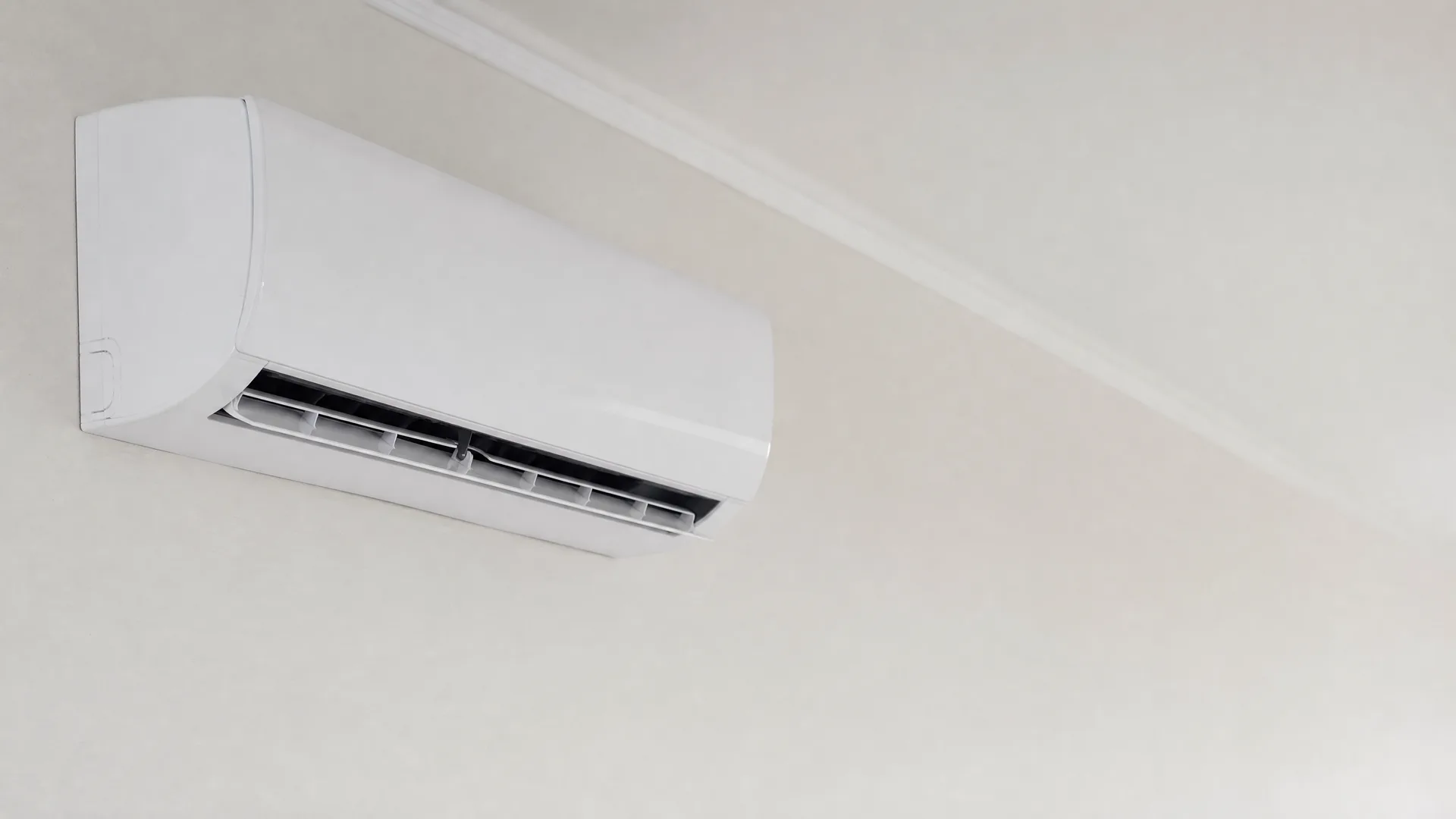
Running clean
This is what a serviced mini split looks like. The coil behind the wall unit is clear, the drain runs free, and the air coming off it carries no smell. Air moves through it the way it's supposed to, so it isn't straining to hold the room at temperature.
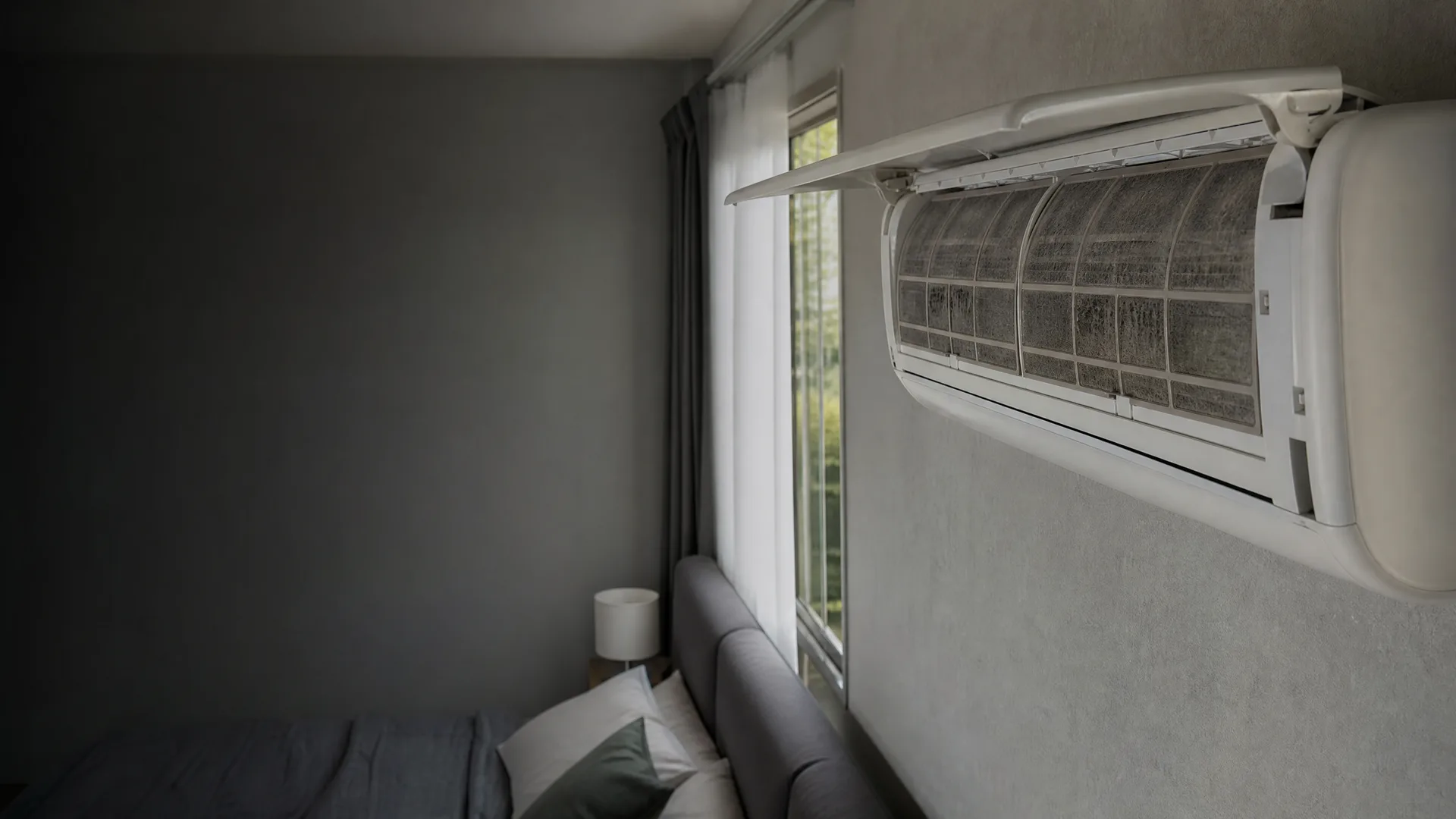
Running dirty
Dust and grime have built up across the face of this unit, and the staining above it on the wall is condensate that isn't draining where it should. A coil this caked pulls harder to move the same air, and that staining tends to spread the longer it sits.
What a Tune-Up Covers, in Plain Terms
A mini split tune-up covers both halves of the system: the outdoor condenser and the indoor head, not just one.
The contractor cleans the coils, checks refrigerant charge, clears the condensate drain, and tests the electrical connections.
A dirty coil or low charge makes the unit draw more power to hold the same room temperature.
Skipping a season doesn't break the system outright, but it shows up as weaker cooling and a higher bill before anything fails.
Scheduling before the heat sets in means the unit is already clean when it starts working hardest.
A local contractor who services mini splits all season knows which parts tend to wear first in a dry, dusty climate.
A mini split tune-up is two jobs, not one. The outdoor condenser sits outside taking the brunt of a Wyoming summer, so a contractor pulls the dust and cottonwood fluff out of that coil. Inside, the air handler gets its own cleaning and a filter check, since that side collects what the outdoor unit doesn't catch. Refrigerant charge gets measured, because a system running low has to work harder to move the same amount of heat. The condensate drain gets cleared so water has somewhere to go instead of backing up into the unit. Electrical connections and controls get tested, since a loose connection or a bad sensor reading can make the whole system behave oddly even when the coils are clean.
None of this is dramatic work, and skipping it for a season won't take the system down. What it does is quieter than that. A coil caked with dust or a charge that's drifted low means the unit pulls more power to hold the same room temperature, and that difference shows up on the bill before it shows up as a problem you can hear or feel. Getting it done before the heat sets in means the system starts the season already clean, instead of catching up once it's already working hardest. A contractor who handles mini splits through a Wyoming summer sees the same wear patterns season after season, which is most of what makes a tune-up worth the time.
Mini Split Maintenance
The right pro for this job
Your request goes to one pro, not a list of companies.