
What defrost mode means on a Wyoming mini split
Defrost mode means your mini split has switched itself over for a few minutes to melt ice off the outdoor unit. In a Wyoming winter, the outdoor coil can drop cold enough that moisture in the air freezes onto it, and once that frost builds up the unit can't pull heat from the outside air the way it needs to. When this kicks in, the outdoor fan stops, you may see steam rising off the unit, and the indoor side may blow cool air or no air for a few minutes. That's normal. The system reverses briefly, warms the outdoor coil to shed the ice, then switches back to heating. If it's cycling into defrost every few minutes, running long stretches in defrost, or the indoor unit stays cold for much longer than a few minutes, something isn't working the way it should.
What happens during defrost
The outdoor unit reverses briefly, running like an air conditioner for a few minutes even though it's the middle of a Wyoming winter. That sends warm refrigerant through the outdoor coil to melt the frost off it. The indoor fan usually slows or stops so it isn't blowing cold air into the room while this happens. You might hear the outdoor fan pause and see steam rising off the unit. That's the ice leaving, not a sign anything's wrong.
When it points to a problem
A normal defrost cycle runs a few minutes every half hour or so in cold, damp conditions and then the unit goes back to heating. If it's cycling more often than that, running long past when the frost should be gone, or the outdoor coil still looks iced over afterward, something's off. A low refrigerant charge, a failing sensor, or a defrost control board that isn't switching back can all cause this, and none of them clear up on their own.
Normal defrost or a sign of trouble
Normal defrost
- The outdoor fan stops and the unit runs quiet for somewhere around five to fifteen minutes before switching back.
- You might see steam or water coming off the outdoor unit as the frost melts and drips away.
- The indoor head may blow cool air or shut its fan off for that stretch, then goes back to heating.
- It happens on its own, usually more than once on a cold Wyoming night, and needs nothing from you.
- Once it's done the unit goes right back to pulling heat from outside air like it was before.
Something's wrong
- Defrost is running every twenty or thirty minutes instead of a few times a night, and the cycles keep getting closer together.
- Ice is still visible on the coil or lines after a defrost cycle finishes, or it's built up thicker than frost.
- The outdoor fan isn't spinning at all during normal operation, not just during defrost.
- The indoor head is blowing cold air for long stretches instead of the short pause defrost normally causes.
- The unit shuts off on its own and won't restart, or an error code shows on the indoor display.
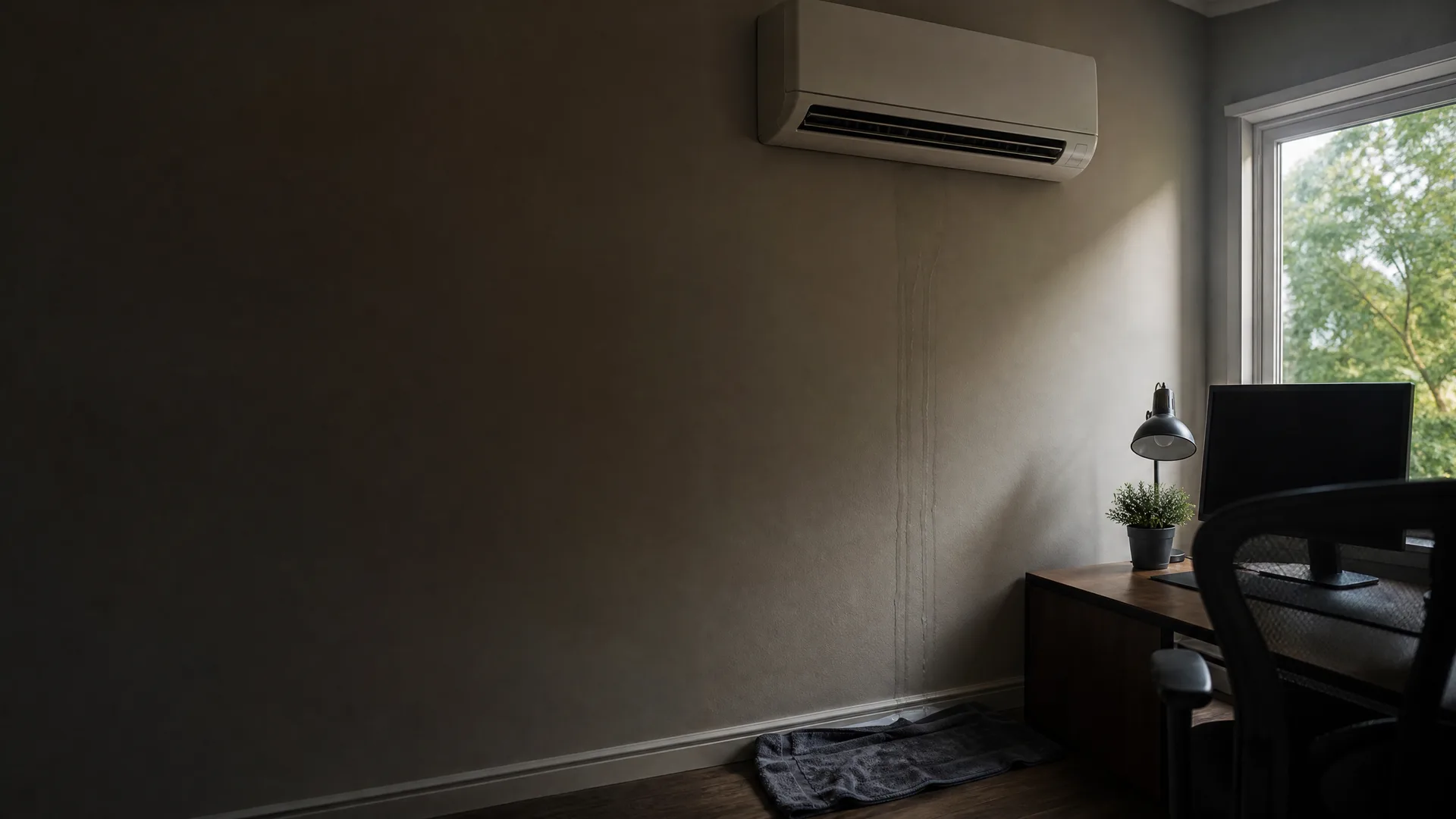
You're at your desk working through the afternoon when you notice the wall looks off. A streak of water is running down the drywall right under the indoor unit, catching the light from the window. Outside it's hot and dry, the kind of Wyoming summer afternoon where the AC should just be humming along. You get up, press a hand to the wet patch, then go grab a towel and lay it along the floor under the vent. The unit keeps running like nothing's wrong, cold air still coming out, but the wall keeps weeping. You stand there a minute, watching the line darken on the towel, trying to figure out where the water's coming from.
Hand off the mini split problem
A mini split that won't come out of defrost, or that frosts up again within the hour, isn't doing its job on a cold Wyoming night. Most homes here lean on gas for heat, so the mini split is likely covering one room or a zone the furnace doesn't reach well, and if it's stuck you're left either without that heat or watching the outdoor unit ice over again and again. That points to a stuck reversing valve, a failing defrost sensor, or a fan that isn't restarting the way it should, and none of those sort themselves out. Figuring out which one it is means finding a contractor who works on mini splits specifically, not just furnaces, then explaining what you're seeing, waiting on a callback, and maybe doing that again with a second contractor if the first one can't get to it soon. Send the request instead and that part of it is off your plate. You can stop checking the outdoor unit every hour to see if it's still cycling.
A mini split stuck in defrost cycles every twenty minutes on a January night will eventually fall behind on the room it heats, and the gas furnace it's backing up won't pick up that slack on its own.
A mini split that defrosts once an hour, runs its five or ten minutes, then goes back to heating normally is doing exactly what it's built to do in a Wyoming winter and needs nothing from you.




How does the mini split know when to go into defrost mode?
How does the mini split know when to go into defrost mode?
A sensor on the outdoor coil tells it, not a clock or a thermostat
A thermistor clipped to the outdoor coil tracks its temperature the whole time the unit runs. When that coil gets cold enough, and stays cold long enough, the control board reads it as frost forming rather than just normal operation on a cold Wyoming night. Some units also time how long the compressor has run since the last defrost and weigh that alongside the coil reading. Once both line up, the board reverses the system into defrost on its own. It doesn't ask how cold the air outside is or guess off a schedule. A unit with a failing coil sensor can misread conditions, either skipping defrost when it's needed or running it when the coil isn't actually frosted.

A summer dew point averaging 42°F, from NOAA climate data, is dry. That's the air your mini split is pulling heat out of every hot afternoon this summer, and dry air gives up its heat without much fight. The unit isn't wringing gallons of moisture out of the room the way it would somewhere muggy, so you won't see much water draining from the indoor head or hear the outdoor fan working as hard to shed that load. None of this touches defrost mode itself, that's a winter habit tied to cold, not summer dryness. But if the same mini split frosts up oddly or short cycles once the weather turns, a dry summer with an easy cooling load isn't the reason. The outdoor coil and its sensor are.
NASA POWER T2MDEW county cells weighted by homes




Power costs 13.37 cents per kilowatt-hour statewide
At that statewide rate, running the mini split's backup heat strip during long defrost cycles on a cold night won't wreck your bill the way it might somewhere power costs more. The repair that's worth watching for is frost that keeps coming back, not the electric cost of fighting it.
EIA-861 2025 statewide residential average
Where that leaves you
- Defrost mode is normal: it runs a few minutes, the outdoor fan stops, then the unit switches back to heating.
- A problem worth a repair call looks different: cycles every twenty minutes, frost that won't clear, or a room that never gets warm.
- A mini split stuck defrosting on a cold Wyoming night can fall behind on the room or zone it's meant to cover.
- The thermistor on the outdoor coil is what decides when defrost starts, not a timer or the thermostat setting.
- Checking a refrigerant charge or a failing sensor isn't something to diagnose from the couch; it calls for a contractor who can open the outdoor unit.
A mini split going into defrost on a cold Wyoming night is doing what it's built to do. The outdoor fan stops, the unit runs quiet for a few minutes, and it switches back to heating once the coil is clear. That's the thermistor on the outdoor coil doing its job, not a sign anything is wrong. What's worth paying attention to is a pattern that doesn't match that: defrost kicking in every twenty minutes, frost that keeps showing up on the outdoor unit even after a cycle finishes, or a room that stays cold no matter how long the unit runs. Those point to something underneath, a weak refrigerant charge or a sensor that's reading wrong, and that's not something to chase down yourself. It means opening the outdoor unit, which is a job for whoever installed it or a licensed contractor with the gauges to check the charge properly. Finding that person is usually the slow part. It means searching for someone who works on mini splits instead of just furnaces, calling a few numbers, explaining the same defrost pattern over and over, then sitting with quotes trying to figure out who actually knows the equipment. Sending the form here skips that part. You explain it once, and the search for the right contractor stops being something you have to do yourself.
Let someone else find the pro
Explain the job once and skip repeating it on every call.
It costs nothing to send, and you don't have to hire anyone.