

Why your mini split leaks water in a Wyoming winter
Tell a local repair pro what your mini split is doing.
Get my matchWhy is my mini split leaking water in the winter?
Cold weather in Wyoming shouldn't cause water on the floor under your indoor unit. You expect condensation in July, not January, so finding a puddle or a drip line of ice when it's single digits outside feels backward. It usually means something is blocking the water from going where it should.
Frozen condensate drain or ice on the outdoor coil
In winter, a mini split running in heat mode pulls moisture out of the outdoor air and that moisture can freeze on the outdoor coil before it drains off. When the unit defrosts itself, that ice melts fast and the condensate line can't keep up, so water backs up and shows up inside near the indoor head. A drain line with a low spot or a clog makes this worse, since even a little meltwater has nowhere to go but out through the unit. If your gas furnace is doing most of the heating and the mini split only runs sometimes, ice has more time to build up between cycles before anything melts it off.
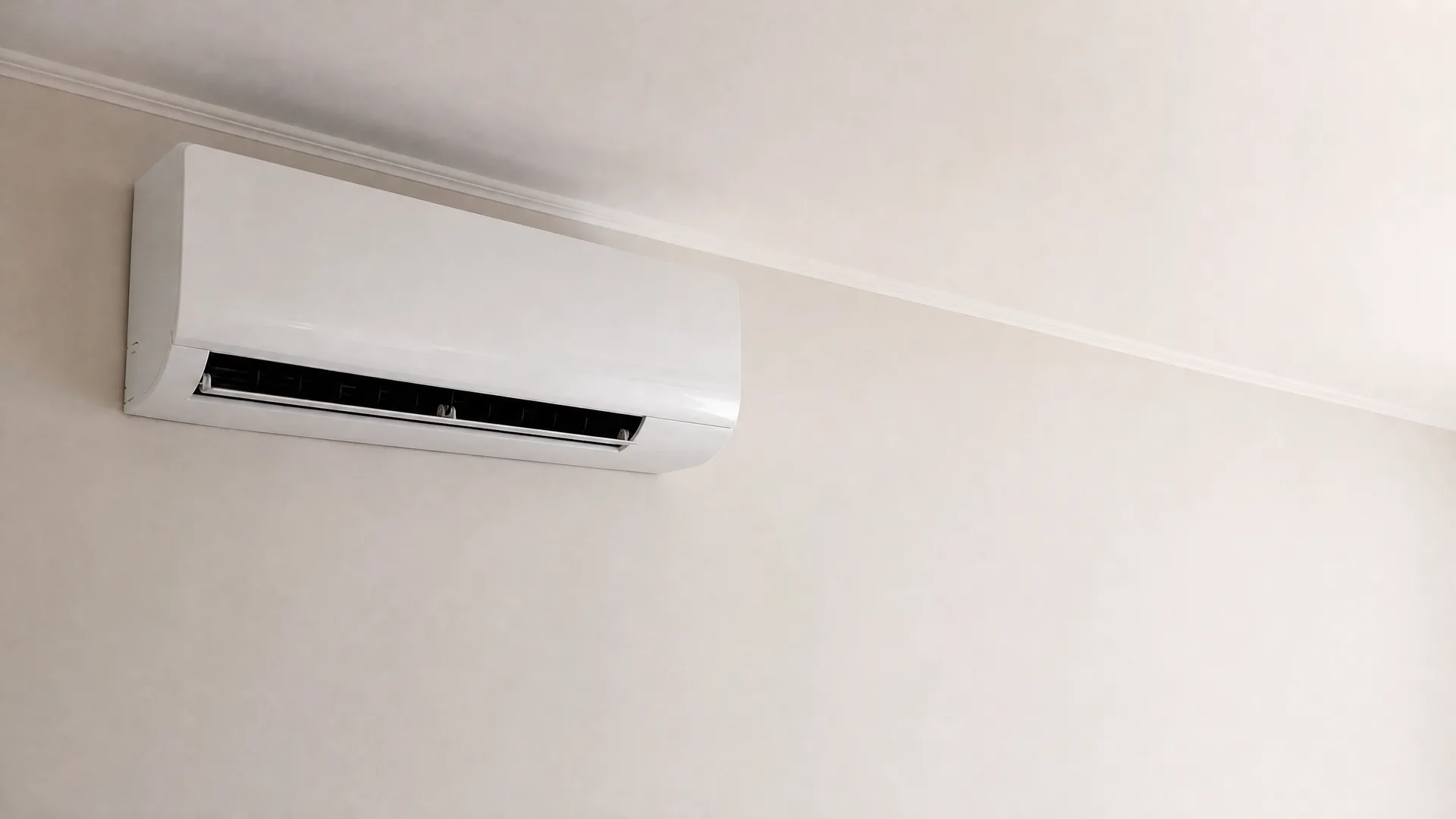
Ice blocks the drain, not the air
A mini split's indoor coil can frost over when it runs in heat mode during a Wyoming cold snap, especially if the filter is dirty or the unit is low on refrigerant. That frost melts between cycles and should run out through the condensate drain. If the drain line itself has frozen, or has a low spot where water sits and freezes, the melted frost backs up into the unit instead and finds its way out onto your floor.
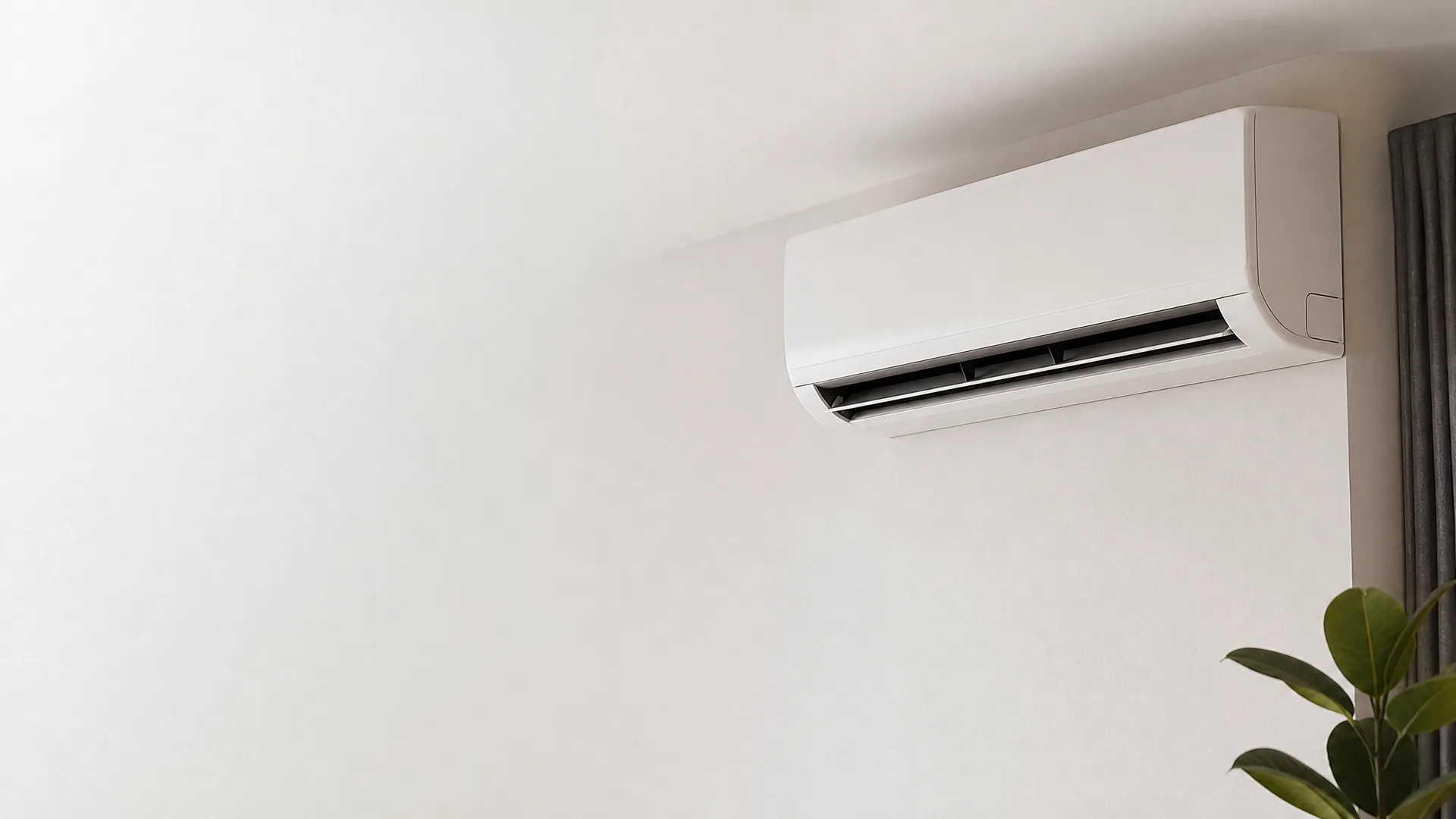
Outdoor unit position matters
The outdoor unit sits lower than the line set on most installs, so condensate and defrost water are meant to drain away from the house. If that unit was mounted close to the ground or on a surface that lets water pool back up toward the wall penetration, melting snow and ice around it can work its way back inside along the refrigerant lines. A contractor checking the leak will usually look at that outdoor placement before anything inside.
Is this just a puddle, or is something going wrong
Look at where the water is actually coming from. A small drip from the indoor unit right after it defrosts is one thing. A puddle that keeps growing, water staining the wall under the unit, or ice building up on the line set outside is another. Check the floor and the wall each morning for a few days. If the wet spot is spreading or coming back no matter how often you wipe it up, that's not a one-time thaw, it's a blocked drain or a coil that keeps icing over. Left alone, that water can soak into drywall or flooring, and the ice on the lines outside can keep building until it damages the unit itself.





How the drain line fails in cold weather
A mini split moves condensate out of the indoor unit through a drain pan under the coil, down a small plastic line, and out through the wall to the outside. That line runs through unconditioned space for part of its route, and in a Wyoming winter the water sitting in it can freeze. Once there's an ice plug, anything that melts off the coil has nowhere to go. It backs up into the pan, overflows, and ends up on your floor instead of outside where it belongs.
A technician checks this by tracing the line from the indoor unit to the outdoor termination, not by looking at the puddle. They're looking for where the ice formed, whether the line has enough slope to drain, and whether something upstream, like a dirty filter or low refrigerant, is making the coil frost harder than it should. That's a different job than wiping up water, and it's why getting matched with someone who already knows mini splits saves you from explaining the same thing to three different contractors before one of them looks in the right place.


Your desk sits under the indoor unit, and that's how you noticed. It's August, the kind of dry Wyoming afternoon where the cooler running steady is the only reason you can sit in this room at all. You look up from your laptop and see the streak first, a dark line down the wall below the unit, then the towel you put down yesterday already soaked through again. No ice, no cold snap, just the unit running hard on a hot day and water finding its way out somewhere it shouldn't. You press a finger to the wall. Still damp. You move the towel over, sit back down, and wonder how long this has actually been going on behind the drywall before you saw it on the surface.
Check It Yourself or Call It In
Handle it yourself
- You can change the filter yourself, and a dirty filter is one of the most common reasons the indoor coil frosts over in heat mode.
- You can check that nothing is blocking the outdoor line where it exits the wall, since ice or snow piled against it will back the water up inside.
- You can watch whether the drip stops once the unit finishes a defrost cycle, which tells you if it's normal condensation or a real leak.
- You can clear light frost or snow away from the outdoor unit itself if it's getting buried or iced over after a storm.
- You won't be able to tell from the outside whether the drain line itself is cracked, sagging, or clogged deep inside the wall.
Call a contractor
- A contractor can run the system and watch the drain pan and line directly to see exactly where the water is backing up.
- A contractor has the tools to clear a clogged drain line without cutting into the wall to find it blind.
- A contractor can check the refrigerant charge, since a low charge is one of the hidden reasons a coil frosts over and overwhelms the drain.
- A contractor can tell you whether the line itself needs insulating or rerouting so it stops freezing in the same spot every winter.
- Skipping the search for someone qualified means no calling around, no re-explaining the puddle to three different companies, and no sorting through quotes on your own.



Matched to your mini split job
Describe what your mini split is doing once, in one form.
A local pro who knows mini splits gets your details and gets in touch.
You only hire the pro if you want to.
Power costs 13.37 cents per kilowatt-hour statewide
At 13.37 cents a kilowatt-hour, running the blower or a backup heat strip to clear a frozen coil doesn't swing your power bill much. With power this cheap, there's no reason to let a frosted-over mini split keep leaking while you wait and hope it clears on its own.
EIA-861 2025 statewide residential average
Wait and see what happens
You could leave it alone for a day or two and watch whether the drip stops on its own. Sometimes a single cold snap frosts the coil, it melts off during the next defrost cycle, and the line runs clear again without anyone touching the unit. If the water stays to a small amount near the indoor unit and doesn't show up again after that, this might be all it was. But if you wait through another cold stretch and the same thing happens, you've lost those days and the ice in the drain line may have had time to build into a harder blockage than it started as.
Get a contractor to look at it
A contractor who works on mini splits can tell you in one visit whether this is a clogged drain line, a refrigerant charge that's too low, or a coil that's icing because of something in how the unit is running in heat mode. That's not something you can diagnose by looking at a puddle. Instead of calling around to find someone who services mini splits, explaining the ice and the drip line twice to two different companies, and sorting through estimates, you answer a few questions once and get matched with a contractor who handles this equipment, and they reach out to you directly.



That same dry air that makes Wyoming summers easy on your mini split, a dew point averaging 42°F across June, July and August, has nothing to do with the leak you're seeing now. This is a winter problem with a summer alibi. The coil inside your indoor unit doesn't care how dry the air was in July when it's fighting frost in January heat mode. What matters now is whether melted frost finds its way down the drain line or backs up into your house. Source: regional climate averages for Wyoming.
NASA POWER T2MDEW county cells weighted by homes
A mini split leaking in a Wyoming winter almost always comes down to the same thing: ice is blocking the drain where meltwater is supposed to run out. Dirty filter, low refrigerant, a drain line that froze shut somewhere in the unconditioned space it runs through. The water on your floor is just telling you where the blockage is, not what caused it. You caught this early, before it meant a soaked wall or a bigger repair, and that's the part worth acting on now rather than later. Instead of searching through contractors, calling a few, explaining the same drip and the same frost pattern to each one, then sitting with quotes trying to guess who actually works on mini splits in your area, you can skip straight to a contractor who already knows what a frozen coil and a blocked line in January mean. One conversation, with someone who handles this equipment, instead of several with people you're still vetting.

Mini Split Repair
A mini split pro near you

- Say what's going on with your mini split, and a pro who works on them reaches out.

- Send it once and finding someone is no longer on you.
- Send the request today and let a mini split pro reach out to you.

- Describe your mini split job once, to one pro.
- Fill out one short form instead of calling around.

- The pro who reaches out is licensed in Wyoming.
- Only one pro gets your request, so you hear from one company.