Profile view of a bearded man wearing a black baseball cap and a dark gray T-shirt against a plain light background.

Why your mini split makes noise in a Wyoming winter

Step 1 of 3: Equipment

Why does my mini split make so much noise in winter here in Wyoming?

Cold nights have set in and your mini split is louder than it used to be, maybe a clicking when it starts, a rattle from the outdoor unit, or a steady whir that wasn't there before. You notice it most in the evening when the house is quiet and you're paying attention to what's running. You want to know if that noise means the unit is struggling against the cold or if something inside it is wearing out.

Cold air makes the outdoor unit work harder, and that shows up as noise

When the temperature outside drops, your mini split's outdoor unit has to pull heat from colder air, so the compressor runs longer and at a higher speed to keep up. That extra effort is often where the noise comes from. Frost can also build up on the outdoor coil on the coldest nights, and the unit runs a defrost cycle to clear it, which can sound like a whoosh or a change in pitch as the system briefly reverses. A rattle or clicking is different. That usually means a loose panel, ice built up unevenly, or a fan blade or mount that's come loose, and those don't go away on their own once winter gets deep.

A white wall-mounted mini-split air conditioner installed near the ceiling on a light-colored interior wall, with a window and green foliage visible at the left edge.

Running quiet

A mini split in good shape cycles on with a soft whoosh and settles into a low hum. Air moves evenly out of the vents. The outdoor unit clicks once or twice as it starts, then runs steady through the cold snap without drawing attention to itself.

A dusty white wall-mounted mini-split air conditioner indoor unit installed high on a beige interior wall below a white ceiling and trim.

Struggling in the cold

Dust packed along the vents and intake grille forces the fan to work harder, and that shows up as noise. A unit this caked underneath often rattles, clicks repeatedly, or whirs loud enough to notice from across the room on a Wyoming winter night.

Normal Cold, or a Problem

Cold Weather Noise

  • The outdoor unit clicks and rattles more on nights near zero because the defrost cycle runs harder to clear frost off the coil.
  • A whirring or buzzing that only shows up below freezing often points to the reversing valve switching back and forth as it fights to keep up.
  • Ice building up on the outdoor coil can make the fan blade clip against it, which sounds like a scrape or a tap with every rotation.
  • Wind off the open ground can rock a mounting bracket that's come loose, so the noise changes with the gusts rather than with the unit's cycle.
  • A refrigerant charge that's low shows up worse in winter, since the compressor has to work longer and louder to pull heat out of cold outside air.

Needs A Repair Call

  • A grinding or metal-on-metal sound usually means a fan motor bearing is going and it won't quiet down on its own.
  • If the noise comes with weak heat at the vents, the problem is likely mechanical, not just the cold snap stressing the system.
  • A unit that used to run quiet and now rattles every time it starts has something loose or worn that needs a hand on it.
  • Noise paired with ice that doesn't clear between defrost cycles points to a stuck reversing valve or a sensor that's failing.
  • A compressor that hums but won't start, or trips off and on, is a sign worth having checked before a hard freeze finds it off completely.
A white wall-mounted mini-split air conditioner installed high on a plain light-colored interior wall near a corner, with a window frame at the left edge.

How the outdoor unit defrosts itself

A mini split pulls heat from outside air even when it's well below freezing, and that coil picks up frost as it works. Every so often the system reverses itself for a few minutes, sends warm refrigerant through the outdoor coil to melt that frost, and switches back. That reversal is what you hear as a clunk or a whir partway through a cold night. The colder it gets outside, the more often that cycle runs, and the more you notice it.

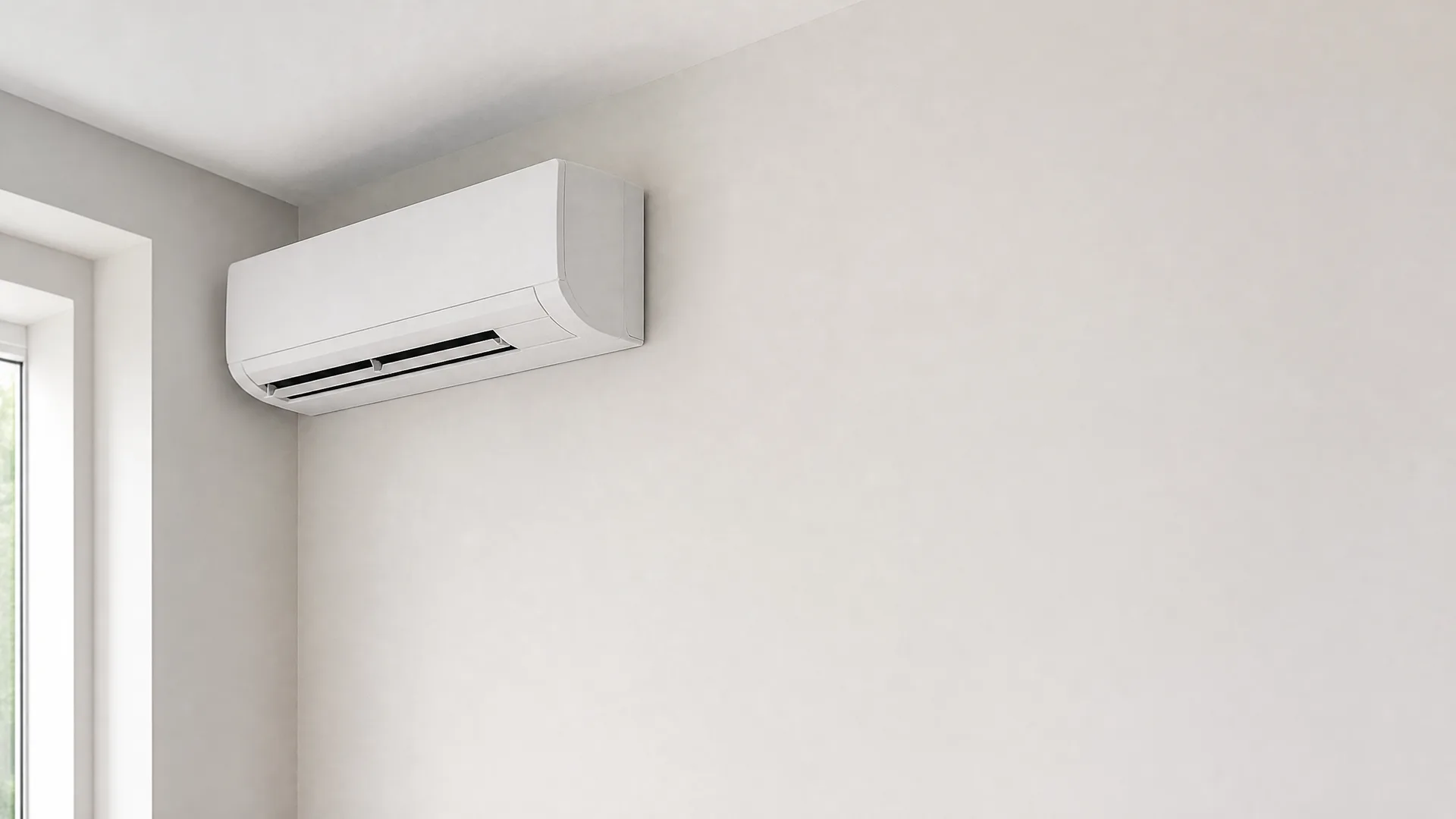
A white wall-mounted mini-split air conditioner installed near the top of an interior corner wall, with large blank light-colored wall space to the left.

What the compressor is working against

The compressor has to work harder to move heat out of air that's near zero than out of air at forty degrees. That extra load shows up as sound, a deeper hum or a buzz that wasn't there in October. Wyoming nights that drop well below freezing push the compressor toward the upper end of what it's built to handle, and a unit that's slipped out of adjustment will strain audibly before it strains in a way you'd notice on the bill.

Power costs 13.37 cents per kilowatt-hour statewide

At 13.37 cents per kilowatt-hour, running a mini split hard on the coldest nights won't wreck your bill the way it might elsewhere. That's worth knowing before you assume the noise means you're paying extra to keep up with the cold.

EIA-861 2025 statewide residential average

What you'll notice at night

Most mini splits run quiet enough that you forget they're there. If yours has gotten loud enough to notice from the next room, or loud enough to wake you, that's a change worth paying attention to. A rattle that keeps time with the compressor, or a whir that lasts well past a defrost cycle, usually means a part working harder than it should. Left alone through a Wyoming winter, that strain tends to get worse on the coldest nights, not better, since those are the nights the system works hardest.

What it risks if ignored

A mini split that's straining to defrost or compress still heats your house, for a while. The risk isn't that it quits on the spot. It's that a loose part or a struggling motor wears faster than it should, and a small fix now turns into a bigger one by spring. Power is cheap here, so the noise probably isn't costing you much on the bill. What it can cost you is the system itself, especially if the same rattle or whir keeps showing up every cold snap and nobody's looked at it.

A smiling man in a dark navy sweater sits on a light sofa in a living room, with a glass bowl of popcorn on a wooden coffee table and bookshelves behind him.
A smiling man in a dark green sweater sits on a tan leather sofa in a dimly lit living room, with a bowl of popcorn in the foreground and a kitchen area blurred behind him.
A smiling middle-aged man in a dark shirt sits on a gray sofa in a living room, with a bowl of popcorn on a side table and shelves, a window and kitchen area behind him.
A smiling bearded man in a dark gray t-shirt sits on a gray couch in a living room, with a large glass bowl of popcorn on a wooden table in the foreground.

It's off your list after this

Describe what your mini split is doing once, in one form.

Sending the form costs nothing.

What's actually making that noise

  • Inside the outdoor unit, the compressor pushes refrigerant through the coil, and a bent or loose fan blade will slap the housing once a second as it spins.
  • A reversing valve shifts a slide inside itself to switch between heating and defrost, and that shift makes a distinct thunk you'll hear once per cycle.
  • The outdoor fan motor ices up faster than the coil does in wind, and ice on the blades throws it out of balance until it knocks against the shroud.
  • Loose mounting bolts on the outdoor unit let the whole cabinet vibrate against the wall bracket, and cold metal transmits that buzz further than it would in summer.
  • A failing capacitor makes the compressor struggle to start, and it will hum or click several times before catching instead of starting clean on the first try.
  • Refrigerant running low shows up as a hissing or gurgling sound at the line set, since the compressor is pulling harder to move less refrigerant through the coil.

Most of these sounds trace back to one of a few parts, and knowing which one helps you describe the problem clearly when you call for help. The compressor sits inside the outdoor cabinet and does the real work of moving refrigerant, so almost any vibration or knock starts there or close to it. A fan blade that's bent, even slightly, will slap the housing with every rotation, which sounds like a fast, steady tick rather than a rattle. The reversing valve is a separate part from the compressor, and its job is to flip the system between heating and defrost. Each time it shifts, a slide inside the valve moves and you hear a single thunk, not a buzz or a whir. Ice is its own problem. Wind can coat the fan blades faster than it coats the coil, and once the blades are uneven with ice, the whole motor runs out of balance and knocks against the shroud around it. Loose bolts are a simpler fix but a real one. If the outdoor unit isn't locked down tight to its bracket, cold metal carries that vibration further than it would on a warm day, so a faint buzz in July can sound like a rattle in January. A capacitor that's wearing out shows up as effort: the compressor clicking or humming two or three times before it catches, instead of starting clean. And low refrigerant doesn't knock or buzz, it hisses or gurgles at the line set, because the compressor is working harder to push less fluid through the coil.

A white wall-mounted mini-split air conditioner on a light gray wall in an empty room with dark wood flooring, white baseboards, a tray ceiling with recessed lights, and a window at the left.
A mini split like this one keeps its cover panels seated and its fan blade clear, so the only sound is the soft rush of air into the room.
A wall-mounted mini-split air conditioner indoor unit with a yellowed plastic casing and dark horizontal vent louvers, installed on a plain light-gray wall.
Dust packed across the top and dark residue around the vents usually mean the filter and coil haven't been cleaned in a while, and that buildup can throw the fan off balance.

A noise that shows up every winter night and gets louder as the cold deepens usually means the defrost cycle is working harder than it should, and that extra strain doesn't stay free forever. A fan blade that slaps the housing can eventually throw itself off balance enough to wear the motor bearing. A reversing valve that clunks hard each time it shifts can stick partway, leaving the unit stuck in defrost while the room slowly cools. You'll notice it first as a room that takes longer to warm up, or a bedroom that's colder than the rest of the house by morning. Left alone through a Wyoming winter, a strained compressor or a failing valve can turn a repair into a full replacement, and that's a bigger job than the noise alone suggests. None of that is certain from sound alone, but the risk is real enough that waiting until spring to look into it can cost you more than the noise itself.

A woman in a dark gray sweater reclines on a light sofa with eyes closed and a slight smile, under a textured gray blanket with an open book resting on her lap, with a lit table lamp and plant in the background.
A smiling bearded man in a navy crewneck sweater sits at a dinner table with a glass of red wine, plates and glasses in the foreground, in a dimly lit room with a lamp and framed picture behind him.
A two-story house with gray and light gray siding, white-trimmed windows and a white front door, flanked by deciduous trees, with a partly browned lawn in front under a clear blue sky.

A summer dew point averaging 42°F across Wyoming, measured over June, July and August, is dry air by any measure. That dryness is why your mini split barely strains to cool in summer, but it also means the unit swings between extremes here, dry heat in summer and dry cold in winter. Dry winter air holds less moisture to begin with, yet the coil outside still pulls what's there from the air and turns it to frost. That's part of why the defrost cycle runs as often as it does once the nights turn cold, and why you hear it working.

NASA POWER T2MDEW county cells weighted by homes

A wall-mounted mini-split air conditioner indoor unit with a dusty, discolored cover, installed near the ceiling on a plain light-colored wall.
Before you get your mini split repair
A white wall-mounted mini-split air conditioner unit installed high on a light gray interior wall below crown molding, with a bamboo-shaded window at the lower left.
After you get your mini split repair

Leave the noise alone

You keep listening for it every night, trying to decide if it's worse than last week. Meanwhile the fan blade or valve causing it keeps wearing, and nothing gets checked until it fails outright.

Start one form

Send the form once

Skip calling around and explaining the rattle twice. Once it's sent, finding a contractor who works on mini splits is off your plate, and you wait for them to reach out instead of chasing anyone down.

Start one form
A closed silver laptop and a ceramic mug of dark coffee sit on a wooden table in front of two chair backs, with a kitchen counter, tiled backsplash, wooden cutting boards, a vase of greenery and a potted plant by a window behind.

So the noise is telling you something specific

A mini split that gets loud on cold nights is usually working through one of a few things: the defrost cycle leaning on the coil, a reversing valve shifting back and forth, or a fan blade that's bent or come loose. None of that is random, and none of it goes away on its own once it starts.

You don't have to figure out which one it is. That part is the work of finding a contractor who services mini splits, calling a few, describing the clicking or rattling again on each call, then sitting with quotes trying to compare them. Send the form once and that whole search is off your plate. You still get the same evening back, just without spending it on hold.

A gray upholstered sofa with a matching cushion sits beside a potted plant and a wooden table holding a small green plant in a stone pot, near a curtained window.
Dark standing-seam metal roofs of wood-sided buildings in the foreground, with a single spruce tree, grassy hills, conifer forest, and snow-streaked mountain peaks behind.

Stop chasing a mini split pro

Skip calling around

It costs nothing to send, and you don't have to hire anyone.

A fan blade that's already rubbing won't fix itself once the cold eases up. Send the request now and skip the work of finding someone yourself, calling around, and explaining the noise over and over to get a quote.