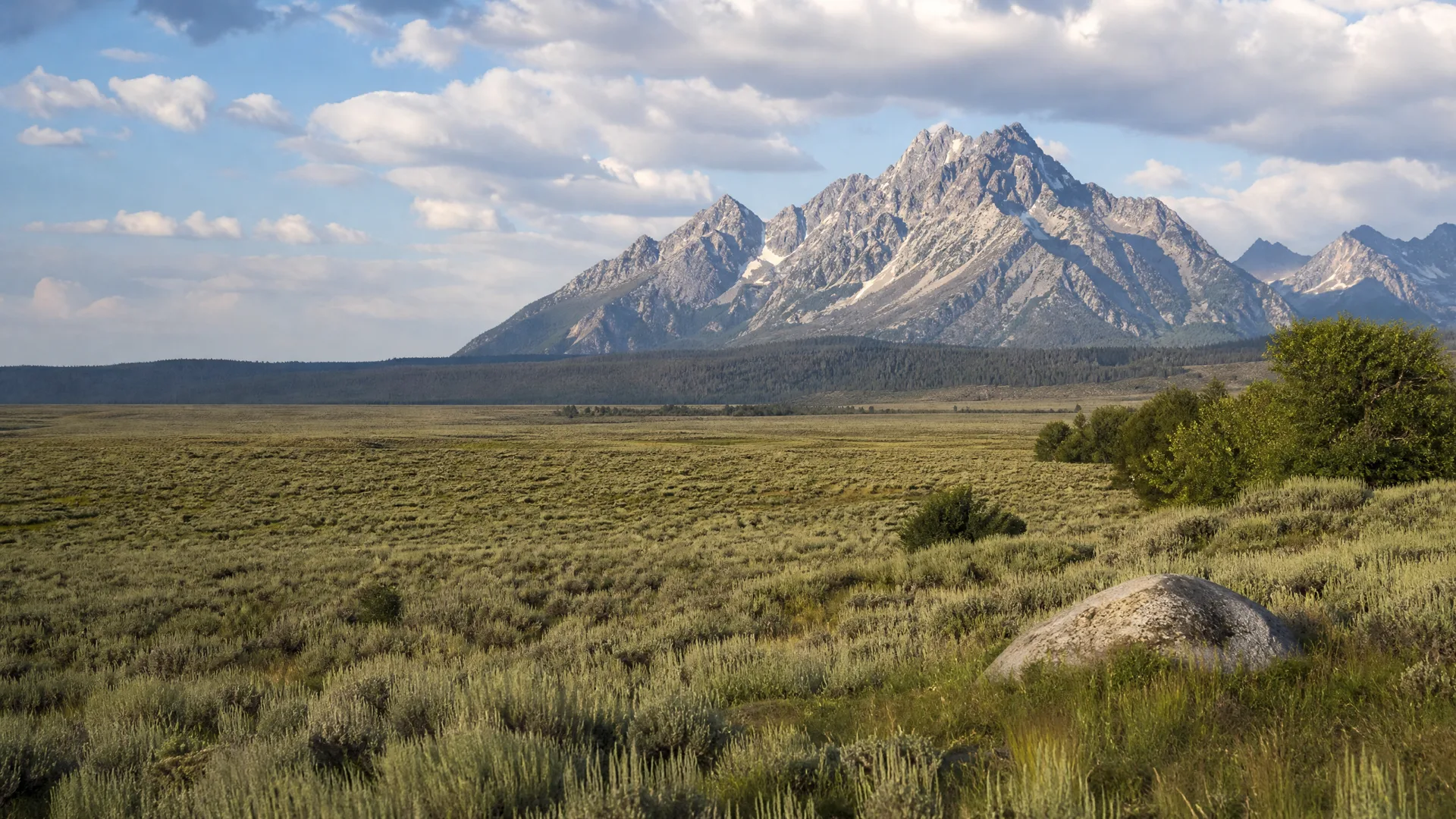
Most heat pumps lose output below 5°F
Wyoming winters push well past that mark some nights. A mini split alone can fall short on the coldest stretches, which is why most homes here lean on gas for backup heat.
A mini split that won't turn on in a Wyoming winter is usually frozen up or shut down to protect itself. Below a certain outdoor temperature, most mini splits start running a defrost cycle to clear ice off the outdoor coil, and if that coil ices over faster than the unit can clear it, the system locks out rather than keep running. Cold also slows the refrigerant down, so on the coldest nights a mini split can struggle to pull enough heat from the outdoor air to satisfy the thermostat at all. A tripped breaker, a frozen drain line, or a failed sensor can cause the same no-start symptom and look identical to a normal cold-weather lockout. Since most homes in Wyoming heat with gas, a mini split issue here often means a backup heat source is working while the mini split sits idle, which is worth knowing before you assume you're without heat entirely.

Summer air here sits at a dew point of 42°F, which is dry. A mini split earns its keep in a place like that, since the outdoor unit has an easy time shedding heat when the air isn't heavy with moisture. That's a different job than the one it's asked to do once the cold sets in. The same outdoor coil that worked without strain all summer is what ices over in winter, and a unit that ran fine in July can still refuse to start in January. Dry summer heat and winter icing are separate problems for the same equipment. Source: regional climate averages.
NASA POWER T2MDEW county cells weighted by homes


A mini split is always checking its own outdoor coil. A thermistor reads the coil temperature, and once it drops low enough the unit decides it's icing over and needs to clear itself. The reversing valve flips the system into cooling mode for a few minutes so hot refrigerant runs through the outdoor coil and melts the ice. You might notice the indoor fan stop blowing during this, which feels like the system quit but is just the unit working through defrost. The whole thing is supposed to finish in a few minutes and then switch back to heating. Problems start when the coil is dirty or the condensate drain is blocked, because that slows the melt and stretches defrost out longer than it should take. If the coil never clears, the control board stops the compressor rather than run it iced over, and that's the lockout you're seeing. Some units also hold the compressor off below a set outdoor temperature on purpose, using a separate low-ambient sensor, which looks the same from the living room but means something different to whoever has to diagnose it.


Wyoming winters push well past that mark some nights. A mini split alone can fall short on the coldest stretches, which is why most homes here lean on gas for backup heat.
Someone local who services mini splits all winter knows which part usually fails first in weather like this, and takes the job from there without a round of calls to sort through.
You hit the remote and the indoor unit lights up, maybe blinks a code, but no air moves and the room stays cold. Outside, the fan isn't turning and there's frost or solid ice built up across the coil and fins. Some units click as if trying to start, then quit. Others run for a few minutes and shut off on their own. If the house relies on the mini split for a room gas heat doesn't reach, that space will keep losing ground the longer it sits off, and pipes near an exterior wall in that room are worth a look if the cold holds for more than a day or two.
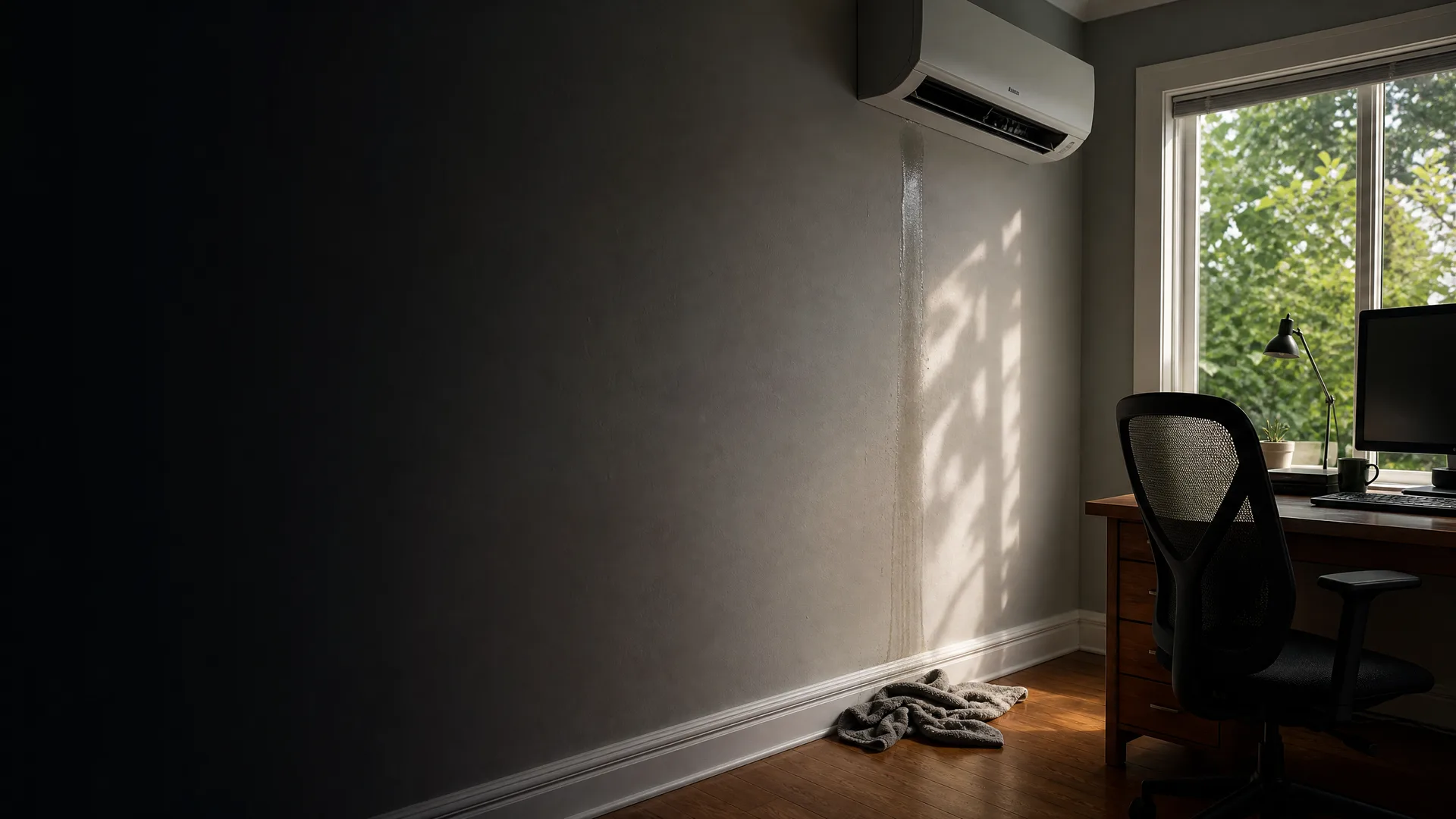
It's a July afternoon and you're at the desk in the home office, mini split humming on the wall above you, keeping the dry Wyoming heat outside where it belongs. You notice the wall under the indoor unit has gone dark, a wet streak reaching down toward the baseboard. There's already a towel on the floor, soaked through. The unit is still running, still blowing air, so it doesn't look broken. It looks like it's leaking. You turn it off and stand there looking at the stain, thinking about what's behind that wall and how long the water's been getting into it before you noticed the towel wasn't enough.
A mini split that won't fire up on a cold Wyoming morning is a refrigerant and electrical problem, not a mystery. Figuring out whether it's a stuck reversing valve, a failed defrost sensor, or ice that's packed in so bad the fan can't turn takes someone who's opened up these outdoor units before, in this kind of cold, more than once this season. That's not a guess any homeowner can make standing outside in the snow looking at a frozen coil. Send the request and it goes to one local contractor who works on mini splits through Wyoming winters and already knows what tends to fail when the temperature drops the way it has the last few nights. You're not stuck calling around or waiting on hold while the house gets colder. You hand off the problem, and whether it's the gas backup carrying the load right now or not, you get the mini split looked at by someone who knows this equipment instead of sorting it out yourself.
If the mini split is the only heat source in the room, a failed defrost cycle on a cold night means that room has no backup. The indoor unit will keep trying and failing, and the space will cool down fast once the outdoor coil ices over. Nothing else picks up the slack. You notice it quickly because there's no second system warming the room while the mini split sorts itself out, and on a hard freeze that gap matters a lot more than it would in a house with gas running to every room.
In most homes here the furnace handles the cold months and the mini split is there for the shoulder seasons or a room that runs hot or cold on its own. When the mini split won't start on a January morning, the furnace is usually still keeping the rest of the house warm. That doesn't make the mini split's failure less worth fixing. It just means the house isn't cold, one room or zone is, and there's less pressure to get a repair done the same day as there would be if that unit were the only thing standing between you and a 10°F night.



The outdoor coil here is clean, so cold air moves through the fins the way it's supposed to. The defrost cycle kicks in, clears the frost in a few minutes, and the unit goes right back to heating the room.

Dust and grime have built up on the casing and vents over time, and that same buildup is choking the coil outside. Ice forms faster than defrost can clear it, airflow drops, and sooner or later the unit shuts itself down.
At 13.37 cents per kilowatt-hour, running your mini split's outdoor fan and compressor through a cold snap costs you little even if it's cycling through defrost all night trying to keep up. That's one less thing to weigh against just getting it fixed instead of pushing it through the winter broken.
EIA-861 2025 statewide residential average
Outdoor coil temperature drops and the thermistor reads it
The control board starts a defrost cycle automatically
The reversing valve switches the system into cooling mode
Hot refrigerant runs through the outdoor coil to melt ice




A mini split that won't come on in a Wyoming winter almost always comes down to ice on the outdoor coil or a defrost cycle that started and never finished. Sometimes it's a thermistor giving the control board a bad reading. Sometimes it's a reversing valve stuck in the wrong position after switching over to melt that ice. Either way, the unit isn't broken in some mysterious sense. It's a specific part doing the wrong thing, and that part can be found and replaced.
Your gas furnace is still carrying the house through the cold stretches, so this isn't an emergency in the way a furnace outage would be. It's about getting heat back into whatever room that mini split serves, whether that's a converted garage, a bonus room, or an addition that depends on it. Worth fixing properly, just not something to panic over.
The contractor who gets this call works on mini splits all winter in this kind of cold. They've seen which sensor fails first, which coils ice up from being packed with dust, which reversing valves stick after a few winters of this. That's the kind of knowledge that comes from doing this work here, not from a manual.
Send the request once and it goes to one contractor, not a list of them. No juggling calls from five companies trying to win the same job. Just someone local, already familiar with this problem, looking at your unit.





The pro who reaches out is licensed in Wyoming.
Sending the form costs nothing.